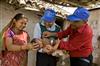
Throughout India and around the world, Rotary clubs are celebrating a major milestone: India has gone three years without a new case of polio. The last reported case was a two-year-old girl in West Bengal on 13 January 2011. To mark this historic triumph, Rotary clubs illuminated landmarks and iconic structures throughout the country with four simple but powerful words, "India is polio free."
Rotary and the United Nations have a shared history of working toward peace and addressing humanitarian issues around the world.
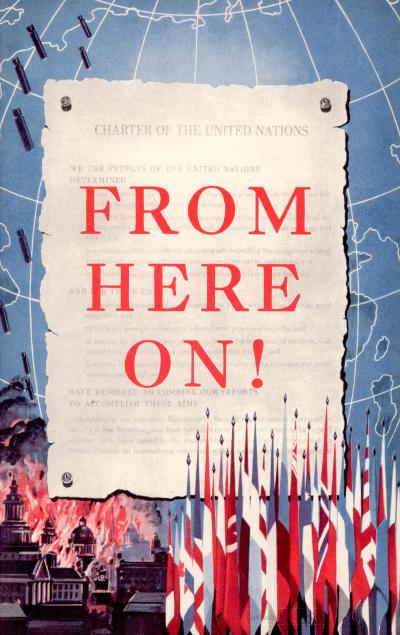
During World War II, Rotary informed and educated members about the formation of the United Nations and the importance of planning for peace. Materials such as the booklet “From Here On!” and articles in The Rotarian helped members understand the UN before it was formally established and follow its work after its charter.
Many countries were fighting the war when the term “United Nations” was first used officially in the 1942 “Declaration by United Nations.” The 26 nations that signed it pledged to uphold the ideals expressed by the United States and the United Kingdom the previous year of the common principles “on which they based their hopes for a better future for the world.”
In early 1919, Rotarian Roger Pinneo of Seattle, Washington, USA, traveled to the Philippines to try to organize a Rotary club in Manila. Leon J. Lambert, a Manila business leader helped Pinneo establish the club. Several months later, on 1 June 1919, the Rotary Club of Manila was chartered and became the first Rotary club in Asia.
The club would be the only one in the country for more than 12 years. Eventually, Manila club members organized Rotary clubs in the Philippine cities of Cebu (1932) and Iloilo (1933). Iloilo club members then started a club in Bacolod (1937), and Rotary continued to expand across the country.


 Throughout India and around the world, Rotary clubs are celebrating a major milestone: India has gone three years without a new case of polio. The last reported case was a two-year-old girl in West Bengal on 13 January 2011. To mark this historic triumph, Rotary clubs illuminated landmarks and iconic structures throughout the country with four simple but powerful words, "India is polio free."
 Rotary and the United Nations have a shared history of working toward peace and addressing humanitarian issues around the world.
 2300 Jackson Street


